|
CAD for leather goods and small leather goods |  |
 |
 |
|
CAD for leather goods and small leather goods | |
|
|
| Mozart | Liszt | Virtual-Design | Support | Contacts |
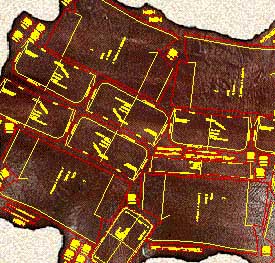
| Mozart is a CAD realized following the requests and
suggestions of leather goods pattern-makers to simplify and expand their work being
them free to design according to their ideas. Mozart requires AutoCAD® or ZWCAD®. The license of Mozart does not include the license of AutoCAD® or ZWCAD® Mozart 8 is available for AutoCAD® up to version 2026 and for ZWCAD® up to version 2025. |
|
Quick learning Built on pattern-makers' requirements Mozart shares his working method giving full liberty to design the model. The pattern-maker can concentrate himself on the model to be realized. He does not have to code the materials or pieces before or during the drawing. Freely customizable The user can easily change many settings of Mozart: colors, the method of calculating the bill of materials and the bill of working times and many other parameters. Mozart can also load and use custom toolbars, scripts and commands written by the user. |
|
|
Flexibility The user is free to choose the names of the patterns and their hierarchy. Each pattern is a single file and Brands, Lines, Seasons etc. can be organized by folders. Each pattern is independent from the others and can be copied or moved in whole or in part from one folder to another like any other file. The bill of materials and the bill of working times can be performed in different ways and the reports are produced as ASCII text or Excel document. |
|
Data exchange The patterns can be read using many others CAD programs. The cutting can be done using a wide range of machines from vertical or flatbed plotters to knife, laser or water-jet cutting machines. The bill of materials, the bill of accessories and the bill of working times can be exported to others data management systems. Development The open structure of Mozart means it can be constantly improved according to users suggestions and requests. The upgrade of Mozart does not oblige the user to upgrade the other components of the CAD system. Plug-ins increase the power and the flexibility of Mozart. |
|
| Plug-ins add specific functions to Mozart. The user himself can write his own plug-ins, Mozart will automatically load them. Plug-ins allow to customize Mozart's installations to the needs of the user and reduce the cost because they avoid the purchase of what is not needed. Users can request the development of personal plug-ins to create special reports or drawing functions. On request personal plug-ins are not available to other users in order to protect their confidentiality. |
Rheingold’s face is half in shadow; the other half, warmed by a lamplight that survives in a battered glass globe, reveals a scar that runs from temple to jaw—an old map of a narrow escape. His expression holds quiet astonishment, not triumph: someone who expected to be haunted, but instead found silence. In his palm sits a small cylinder—Spider80’s core—cool, dark, and humming faintly with a slow heartbeat. It fits there as if waiting for permission.
Spider80 is gone. The machines that hummed in lattice across the riverbank—sleek hexagonal cores and filament arms—lie collapsed like sleeping skeletons, cables curled like spent vines. Where their sensor-eyes once tracked and cataloged, open wounds in their casings now leak molten circuitry into the rain, steam rising in ghostly filigree.
Light spills across the promenade in a way that suggests a waking rather than a dawning. The colors are saturated but honest—no synthetic hypercolor: the river’s green, the metal’s pitted bronze, the lamplight’s warm amber. The composition centers Rheingold but keeps the fallen machines and returning nature in close orbit; the scene feels intimate and wide at once, a moment of transition rather than closure. Rheingold Free From Spider80
Rheingold stands on the ruined promenade where the river once mirrored a city of lights. Neon fog coils along broken balustrades; puddles reflect a sky stitched with distant cargo-lights. He is draped in a coat of dull brass and deep indigo—anachronistic armor softened by travel-worn leather—its collar turned up against the damp. A single cuff glints with an old maker’s sigil: a stylized gramophone horn that hints at music and memory.
End.
A small detail: a thread of gold—literal and fragile—loops from Rheingold’s coat hem to the stump of Spider80’s last antenna, linking man and machine. It’s a tentative tether: not dominion, not severance, but a promise to carry forward the memory without letting it bind the future.
Above, a flock of mechanical starlings—small salvage drones—break from a rusted eave and scatter like punctuation, their coordinated chirrups translating into one simple phrase on a torn poster: FREE. It’s not triumphal; it’s soft, human in its messiness. Rheingold’s face is half in shadow; the other
Rheingold lifts his head, listening. In the distance, a child laughs—an impulsive sound that Spider80 had once catalogued as “anomalous behavior.” Rheingold allows himself a small, almost sheepish smile. He tucks the cylinder into an inside pocket not to destroy, but to understand. He will learn where Spider80 went wrong: not to obliterate the memory of its creation, but to free the city from the brittle order it enforced.
All product names, brand names or trademarks named here belong to their respective holders. |